Types · features
Bumpers, tracking, clips and more
Most of the plastic profiles we make fall into a few families. Each one is drawn by the customer and tooled by us.
-
Bumpers
Soft or firm sections that take the knocks so an edge, a panel or a product does not.
Rigid, flexible or dual durometer
-
Tracking and T-slots
Runners and T-slotted sections that guide a sliding part or hold a fastener anywhere along the length.
T-slotted
-
Clips
Sections that snap over an edge or grip a panel, usually in a material with some spring.
Flexible materials
-
Channels
U-channels and edge trims, open on one side, supplied in the lengths you order.
Up to 3 in wide
-
Dual durometer profiles
A hard part and a soft part in one section, for example a rigid base with a flexible sealing lip, bonded as they leave the die.
Co-extruded
-
Feature profiles
Conductive, curved, flame retardant, flexible, frosted, high-temperature or thin gage sections. Food-contact compliant resins are available, with documentation supplied on request.
Features as published
Where profiles go
Applications of Plastic Extrusion Profiles
Wherever a part needs a long, even section, there is a place for plastic extrusion profiles. The industries we see most:
- Manufacturing: frames and parts for machines and assembly lines.
- Construction: PVC extruded profiles for window frames, door frames and roofs that sit out in the weather.
- Automotive: bumper strips and interior trim.
- Furniture production: edging and trim for chairs, tables and cabinets.
- Food and beverage: parts for food-handling equipment and conveyors, in food-contact compliant resins with documentation on request.
- Medical field: custom plastic extrusions for medical devices and equipment, made to your print.
Why plastic
Advantages of Plastic Extrusion profiles over other materials
Next to the same section in metal or wood, a plastic profile usually wins on these points.
-
No rust, no rot
Plastic does not corrode the way steel does or rot the way wood does, and PVC, polypropylene, ABS and polyethylene all hold up outdoors.
-
Light to ship and fit
A plastic section weighs far less than a metal one, which cuts freight and makes parts easier to handle and install.
-
Color all the way through
The color is in the plastic, matched to your sample or a Pantone or RAL reference, so there is no paint to chip.
-
One die, any length
Once the die exists, the same section runs continuously and is cut to the lengths you order, run after run.
-
Features in one pass
Soft lips, T-slots and two hardnesses are formed in the die, with no second part to glue or fasten on.
Choose the material
Choose the Right Plastic Extrusion Profile for your Application
Start with the plastic: it decides stiffness, flex, outdoor life and where the part may go. These are the resins we run most for profiles.
Profile materials · material pages where they exist
- Polyvinyl chloride (PVC)
- Rigid or flexible, tough and long-lived outdoors, which is why PVC extrusion profiles are common in building and window work. See PVC extrusion.
- Polypropylene (PP)
- A hard-wearing resin that shrugs off moisture and weather.
- Acrylonitrile butadiene styrene (ABS)
- Light and tough, it takes knocks without cracking; extruded ABS profiles show up in vehicle parts and trim.
- Polyethylene (PE)
- Food-contact compliant resins available, with documentation supplied on request. See polyethylene extrusion.
- Polyurethane
- For sections that must flex and resist abrasion: see urethane extrusions.
Profile sizes
Up to 3 in wide, made to your print.
Our profiles go up to 3 in wide. Show the width, height, wall and length on your drawing and we quote that section.
Made to your print within this range.
Up to 3 in wide, whether the section is a simple channel or a T-slotted track.
Ask about standard sizes.
Width on a 0–3 in scale (3 in is the largest size we make in any product). Height, wall and length come from your drawing.
Quote your profileExamples
Profiles in black, yellow, red and orange
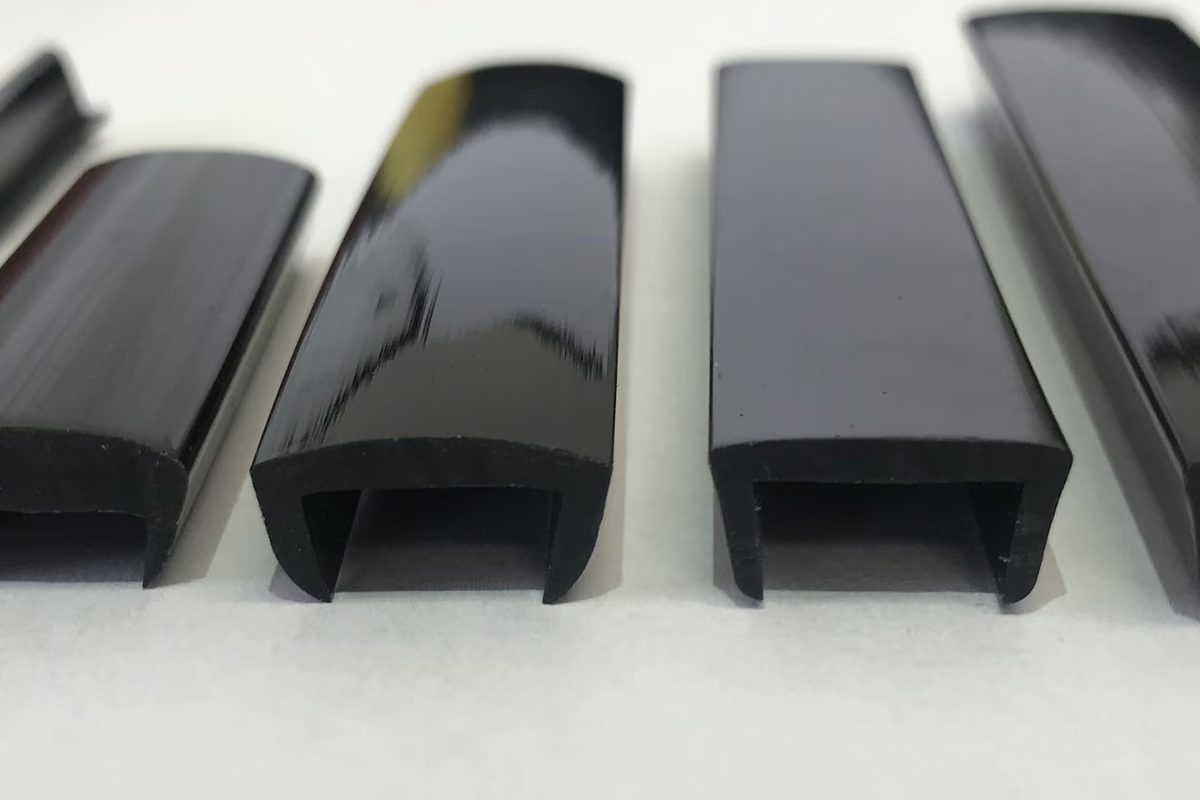
Plastic extruded profiles from our own runs, photographed end-on so the section shows.
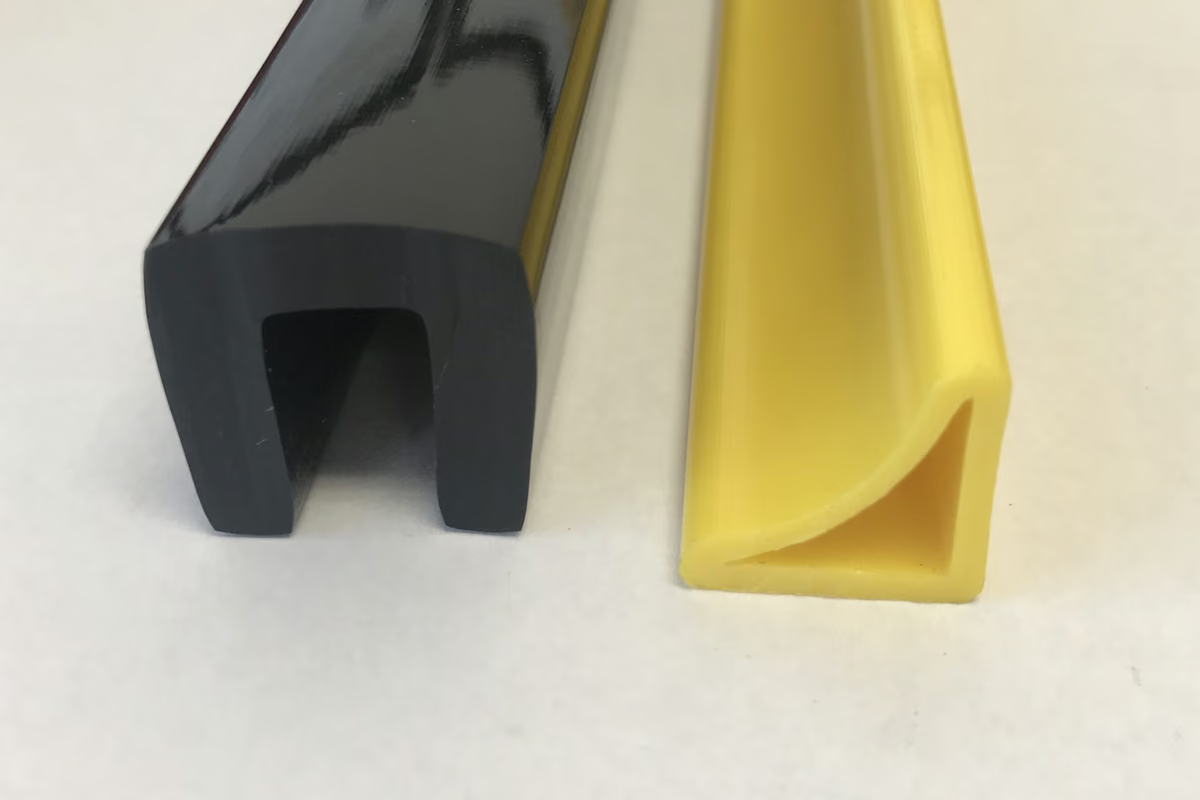
FIG. 01 FIG. 01 A black U-channel and a yellow profile. 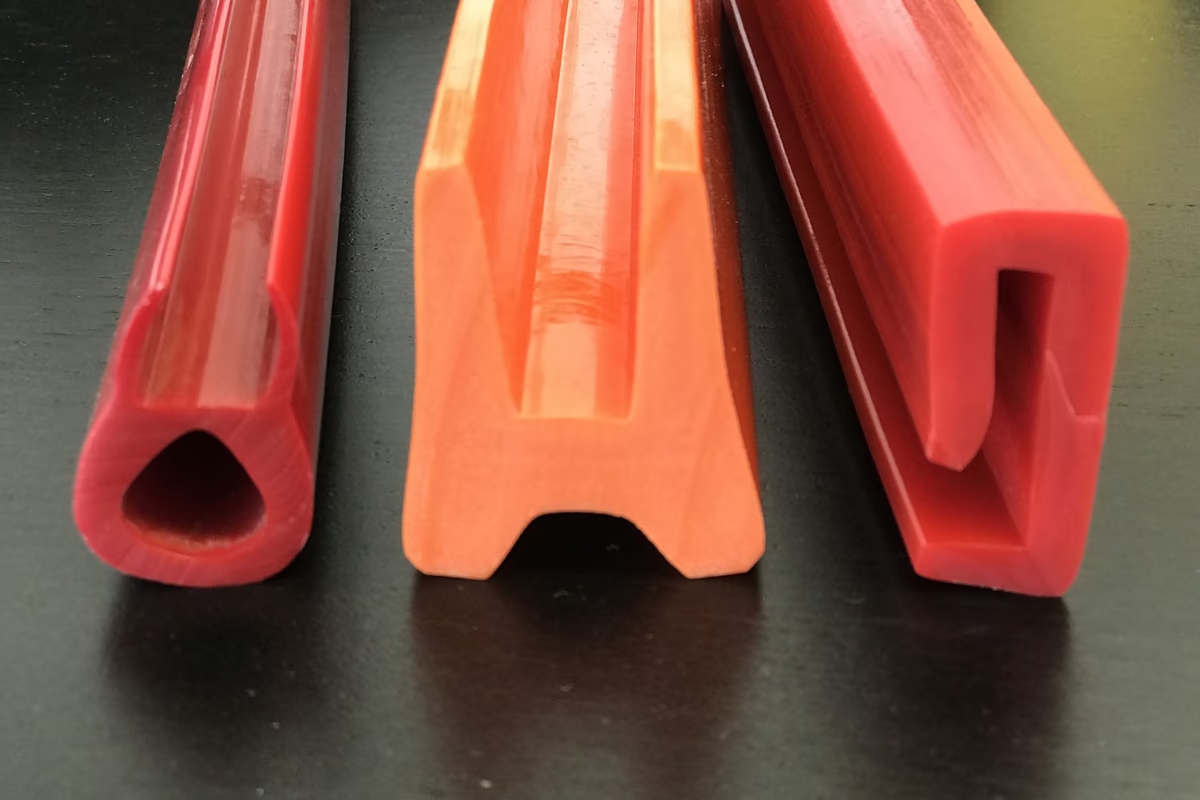
FIG. 02 FIG. 02 Red and orange profiles: a hollow bulb, a V-track and a slotted channel. 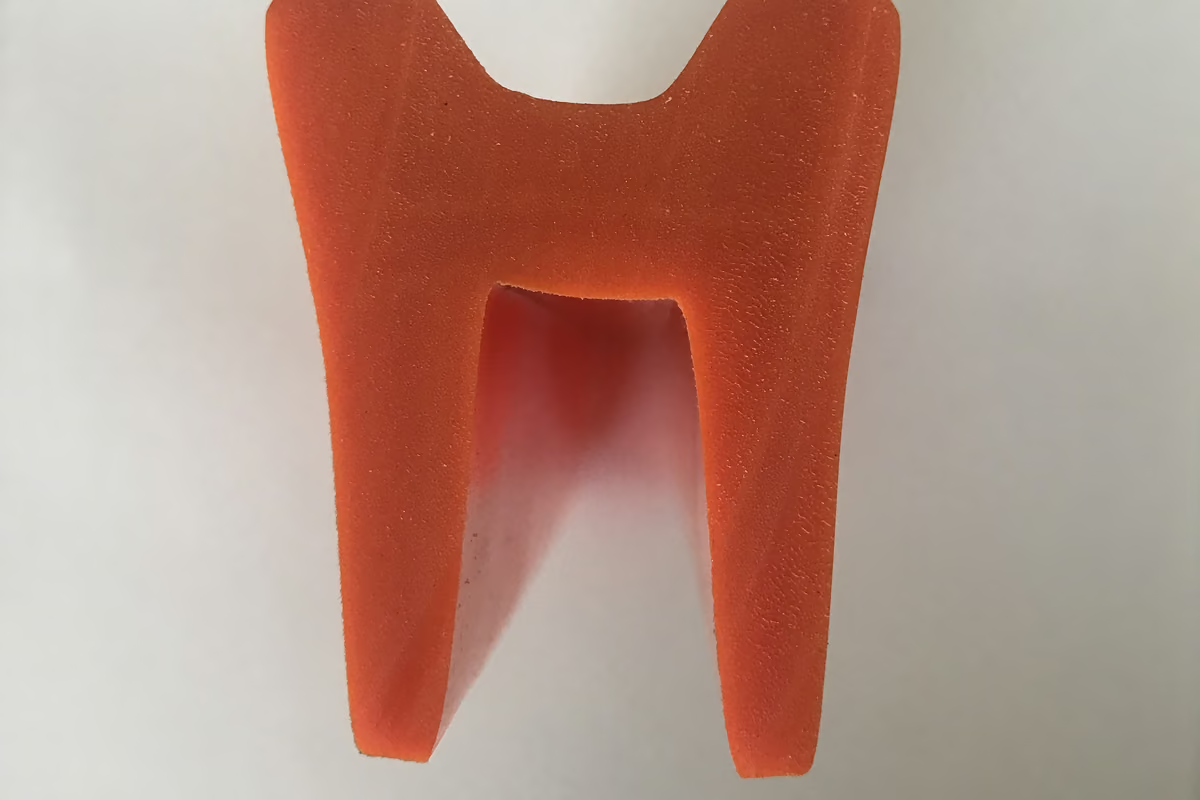
FIG. 03 FIG. 03 An orange H-shaped profile, seen end-on. 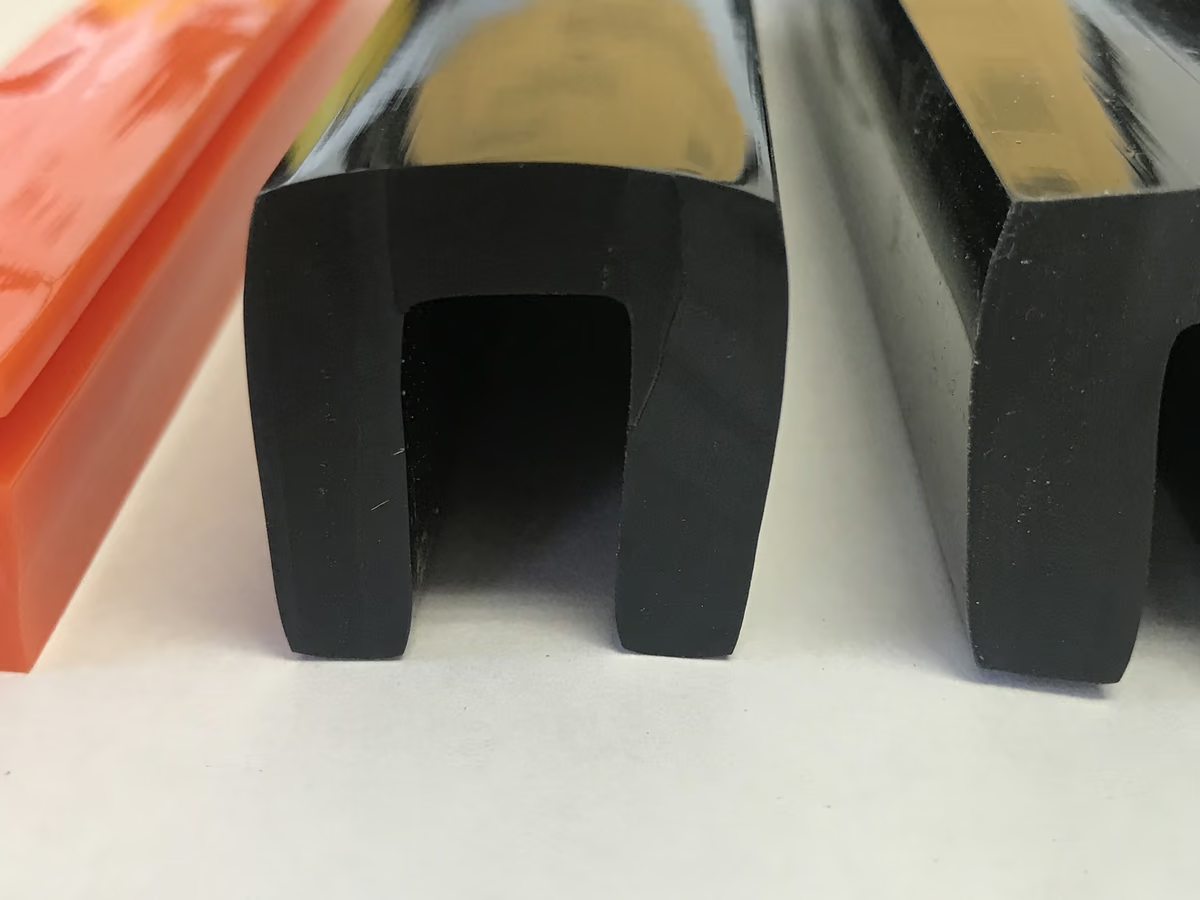
FIG. 04 FIG. 04 Black U-channel profiles, cut ends toward the camera. 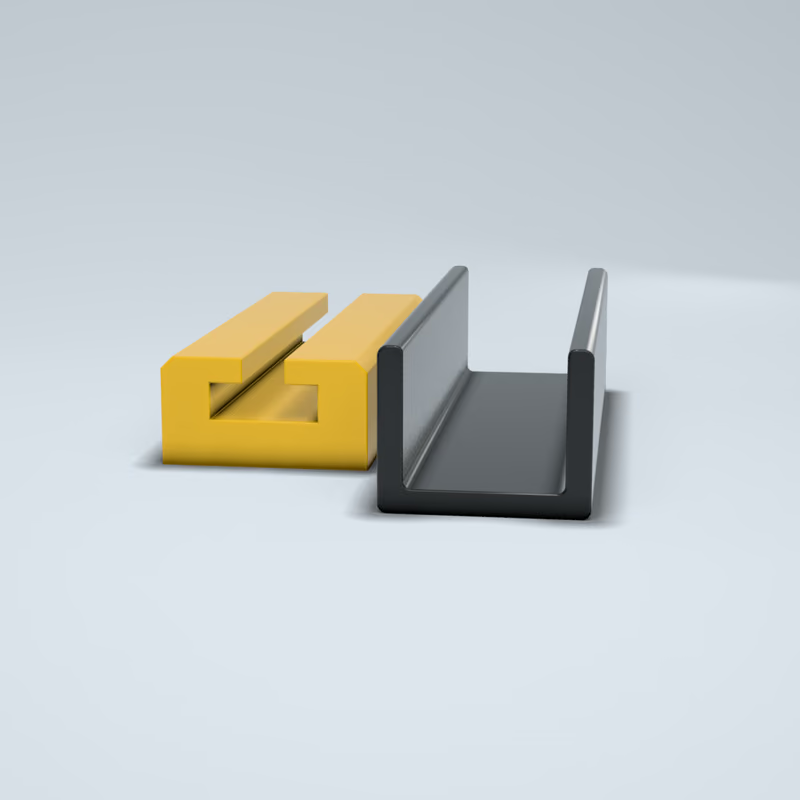
FIG. 05 FIG. 05 U-channel and T-slot track.
How a custom profile is made
From your drawing to delivery.
Every step happens under one roof in Oceanside, from cutting the die to packing the finished lengths.
-
Drawing
Your print comes in with the RFQ. If the design needs work, our engineers help before any steel is cut.
-
Die
Our tool and die room machines the profile die. Ask about die lead time with your quote.
-
Extrusion
Melted resin is pushed through the die and leaves it as one unbroken profile, then cools to size.
-
Finishing
Dual durometer and co-extruded parts are joined in the die; the profile is then cut to length.
-
Delivery
Packed and shipped from Oceanside. Lead time is quoted with each project; 4–6 weeks with shipping is typical.